
Lore
Yin–Yang Release
Yin–Yang Release (Onmyōton, In'yōton) is a nature transformation that combines…
Yin–Yang Release (Onmyōton, In'yōton) is a nature transformation that combines Yin Release and Yang Release, two natures that exist outside the five basic elemental natures. Yin Release uses spiritual energy and Yang Release uses physical energy, which are the two components of chakra. This in turn means that all jutsu that utilise chakra are at least distantly rooted in Yin–Yang Release.
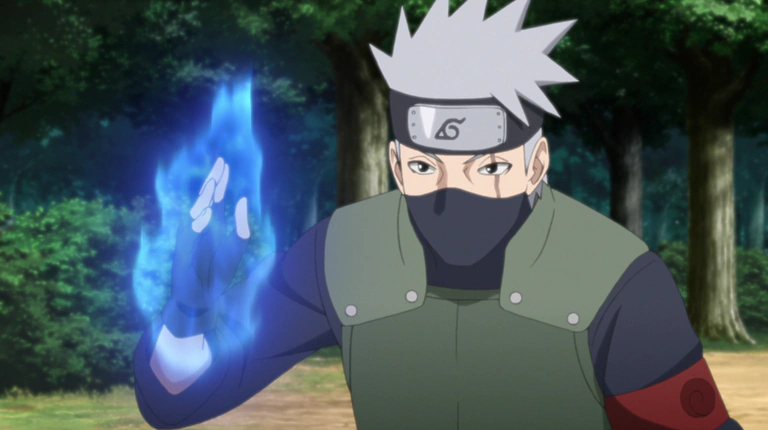
Hagoromo Ōtsutsuki, famed as the "Sage of Six Paths", utilised Yin–Yang Release with the Creation of All Things Technique: by creating form out of nothingness (Yin Release) and then giving the form life (Yang Release), he was able to create the nine tailed beasts from the Ten-Tails' chakra. Over a millennia later, Hagoromo's spirit gives some of his power to Naruto Uzumaki, allowing Naruto to use Yin–Yang Release as well: he stabilises Might Guy's life force, whose body nearly expired due to using Eight Gates Released Formation; he restores Kakashi Hatake's left eye, which Kakashi lost over a decade earlier; he resuscitates Obito Uchiha, whose body was badly fatigued from having the Ten-Tails removed from his body. But Yin–Yang Release's healing ability remains limited, as Naruto cannot save Obito from the effects of the All-Killing Ash Bones.
Yin–Yang Release can be used to nullify the effects of all ninjutsu. Jinchūriki of the Ten-Tails take advantage of this by adding Yin–Yang Release to their Truth-Seeking Balls: when the balls are made into weapons, the weapons can break through any ninjutsu, even nullifying the regenerative bodies of those revived with the Impure World Reincarnation, which also makes conventional ninjutsu have no effect on hosts as well, though both remain vulnerable to attacks infused with natural energy, such as senjutsu. According to Sasuke Uchiha, only through combination of his Yin Power with Naruto's Yang Power could they seal Kaguya Ōtsutsuki, the progenitor of chakra itself on Earth.
Sources
Adapted from the original article, under CC BY-SA 3.0.